Kathy Aoki: Koons Ruins
March 25 – September 13, 2027
Cantor Arts Center at Stanford University
Kathy Aoki pits her feminist art collector against the art world’s looming star in this immersive, satirical exhibition.
Cantor Arts Center at Stanford University
328 Lomita DriveStanford, CA 94305Monday and Friday 11 a.m.–6 p.m.
Thursday 11 a.m.–8 p.m.
Saturday–Sunday 10 a.m.–5 p.m.
Free
ADA Accessible
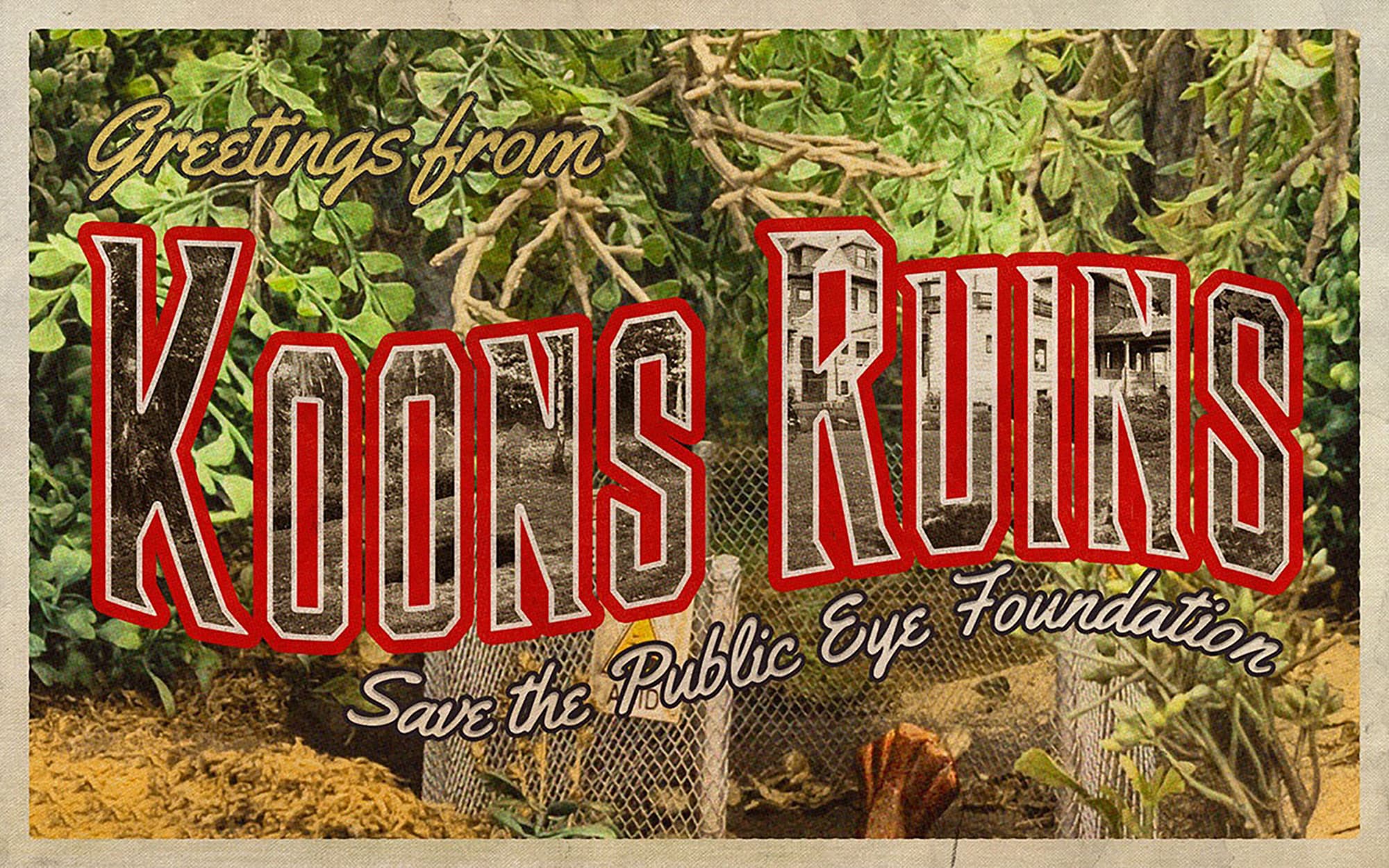
In Koons Ruins Kathy Aoki invites you to enter a robust visitor center for a fictional estate, where a determined art collector has embarked upon a vendetta against Jeff Koons and the art world that made him a star. Here, sculptures disintegrate, a chemistry lab concocts proprietary elixirs, and Koons’s legacy sinks further and further into the ground.
Blending critical wit, faux academic excellence, and real art-historical references, Aoki’s narrative unfolds through an eclectic mix of media, including a peephole diorama, interactive learning panels, oil paintings, archival materials, video, and animations. Together, these elements create a playful yet pointed examination of how the art world assigns value. Through her collector’s fictional campaign, Aoki asks viewers to reconsider who determines an artwork’s significance, what it means to be a collector, and why certain objects become coveted in the first place. The project also poses the provocative questions: “Is there an optimal life span for an artwork? And what might it mean to intentionally bring that life to an end?”
Equal parts art world satire, feminist intervention, and meticulously constructed fiction, Aoki’s project turns the museum into a site of inquiry—inviting visitors to question the hierarchies, ambitions, and assumptions that underpin the contemporary art world.
Exhibiting Artists
Kathy Aoki
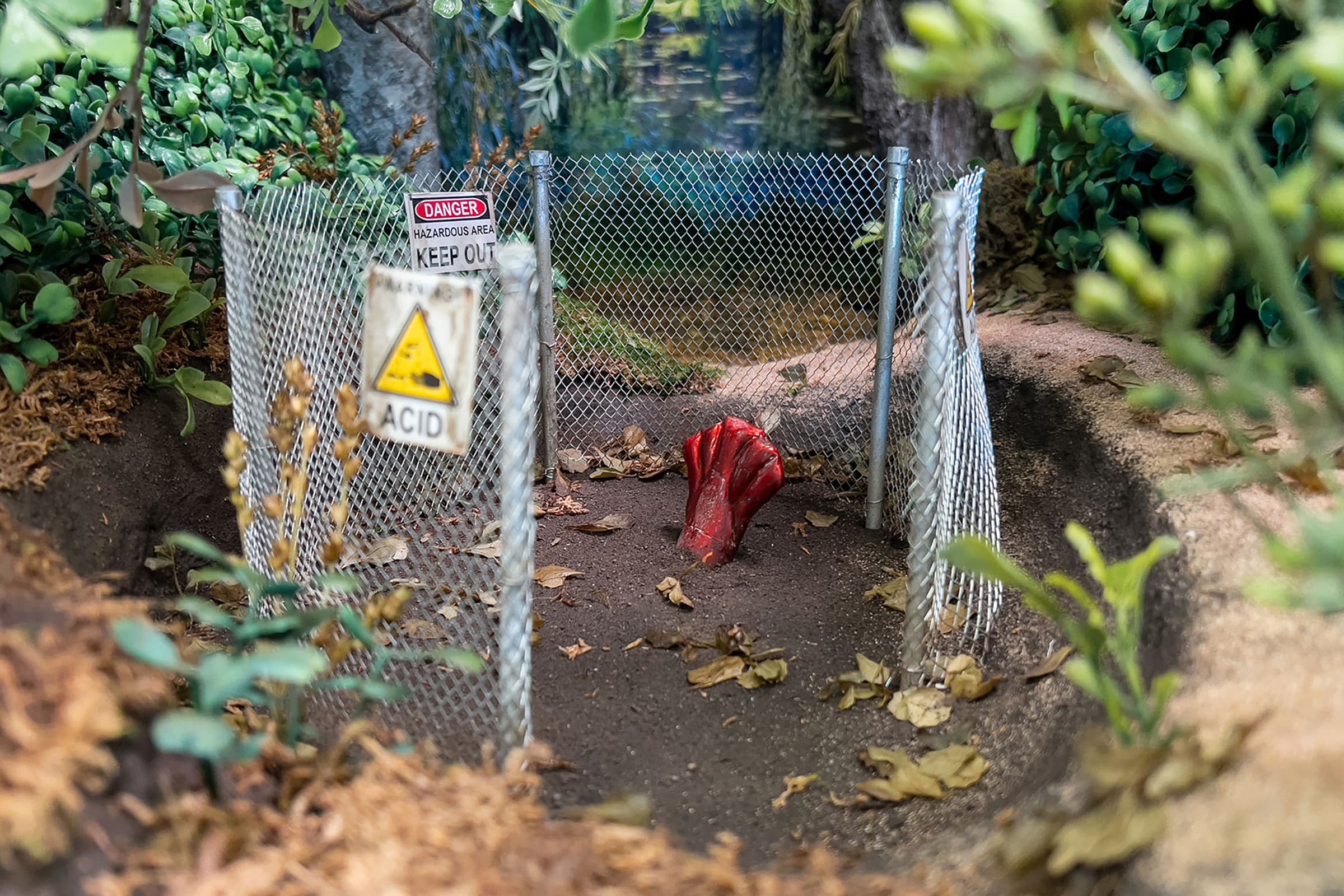
Kathy Aoki, Koons Ruins Lobster Peephole Diorama, 2022. Mixed media, dimensions variable. Courtesy of the artist. © Kathy Aoki
Cantor Arts Center at Stanford University
Cantor Arts Center at Stanford University offers outstanding visual arts experiences for campus, local, and global visitors. Its collection spans 5,000 years with 40,000+ works. Founded in 1891, its many offerings—which are free to all—make it among the nation’s most-visited university art museums.
Things to Do Around Here
The Cantor collaborated with Voyager Coffee to produce a signature coffee for one of our exhibitions! Only .4 miles from our museum, this place sources, roasts, brews, and serves noteworthy coffee and snacks.
Anonymous
Make Tootsie’s at the Cantor Arts Center a destination before or after your visit to the museums, or enjoy a savory pause between galleries. Owner Rocco Scordella has put together an Italian menu that includes a daily soup, a selection of paninis, the Tootsie’s burger with secret sauce and mozzarella, and of course dolci, vino, e caffè.
Anonymous
The Stanford Arizona Cactus Garden was designed for Jane and Leland Stanford by landscape architect Rudolf Ulrich between 1881 and 1883. During the early years of the university, the Cactus Garden became the meeting place for many courting Stanford students.
Anonymous